
Projects in the DRUGS Team
Our projects mainly involve aspects of malaria but we are continuously broadening our research topics into other areas of neglected tropical diseases and global health.
Ongoing Projects
Project title: BSU4 - University of Hargeisa in collaboration with Danish consortium of Universities
Aim:The development of the institutional research capacity at University of Hargeisa, Somaliland
Period: 2023 - 2028
Partner:
University of Hargeisa (UoH) in Somaliland
Roskilde University, University of Southern Denmark
Project coordinator: Associate Professor Michael Alifrangis and Project Manager Dorte Holler Johansen
Funder: Danida
Total grant: DKK 70 million, i.e. DKK 20 million to the Danish Consortium
Project title: From pre- to complete elimination: preVENTing recurrent malaria epidemics in Zanzibar
Aim: Zanzibar has made remarkable progress in reducing malaria transmission over the past two decades. However, recent years have seen a resurgence of intense outbreaks, particularly among young adult males in urban areas.
The PREVENT project seeks to understand the underlying causes of this epidemiological shift and to develop targeted, evidence-based interventions to support malaria elimination efforts.
The project investigates key drivers of epidemic malaria, including human mobility between mainland Tanzania and Zanzibar, behavioral and socio-economic risk factors, parasite genetics, and changes in mosquito ecology. Through five interdisciplinary work packages, the project integrates epidemiological, entomological, genomic, and social science approaches.
Innovative technologies such as drone-based remote sensing and environmental DNA (eDNA) will be used to detect and map mosquito breeding sites, offering scalable and cost-effective tools for early outbreak detection. Parasite samples will be analyzed using Oxford Nanopore sequencing to determine origin, relatedness, and drug resistance patterns, while antibody assays will assess individual exposure to mosquito bites.
The project will also engage stakeholders in co-creating and pilot-testing a context-specific intervention targeting high-risk populations and transmission hotspots. This includes strengthening surveillance systems, improving case management, and enhancing community engagement.
By embedding advanced tools and training within local institutions, PREVENT contributes to long-term research capacity in Zanzibar. The project supports two PhD students and two postdoctoral researchers, and builds on strong partnerships between Danish and Tanzanian institutions.
Ultimately, PREVENT aims to generate actionable knowledge to improve epidemic preparedness and accelerate progress toward malaria elimination in Zanzibar and similar settings
Project coordinator: Associate Professor Helle Hansson
Funder: Danida
Total grant: DKK 10 million
Project title: Empowering Young Lives: Tackling Health Challenges Among School-Aged Children in Somaliland
Aim: Anaemia is a major public health concern in low- and middle-income countries, with particularly high prevalence in the WHO African Region.
In Somaliland, anaemia affects an estimated 43.4% of children under five and 23.1% of school-aged children. Despite this burden, the specific causes and consequences of anaemia in school-aged children remain poorly understood.
Anaemia in this context is multifactorial, involving nutritional deficiencies, parasitic and bacterial infections, genetic haemoglobinopathies, and socio-economic challenges. Malaria and intestinal helminths are presumed common due to poor sanitation and limited healthcare access, contributing to chronic blood loss and impaired red blood cell production.
Bacterial infections, such as Salmonella and Staphylococcus, may further exacerbate anaemia by disrupting production and increasing red cell destruction. Genetic conditions such as sickle cell disease and thalassemia also contribute to anaemia’s complexity. These biological factors are intensified by poverty, food insecurity, and limited access to health services.
Moreover, anaemia in school-aged children is not only a health issue but also a developmental one. Evidence from other sub-Saharan African countries suggests that anaemia and related infections can impair motor and cognitive development, with long-term consequences for educational attainment and quality of life. However, such data is lacking for Somaliland.
To address these gaps, we propose an interdisciplinary research project between the University of Hargeisa and research institutions in Denmark. The study will investigate the prevalence and aetiology of anaemia among school-aged children in selected school settings using a range of methodologies, including state-of-the-art Nanopore sequencing. It will assess the contribution of infections, genetic factors, and socio-economic conditions, and examine the impact of anaemia on motor and cognitive development.
The project includes a strong capacity-building component, aiming to strengthen local research infrastructure and expertise across methodologies. Findings from this study will inform the design of a pilot pre- and post-intervention study targeting anaemia reduction in school-aged children. Ultimately, the aim is to provide evidence-based recommendations for public health policy and school health programs in Somaliland, contributing to improved educational and developmental trajectories for children in the region.
Project coordinator: Associate Professor Michael Alifrangis
Funder: Danida
Total grant: DKK 10 million
Previous Projects
Project title: Predicting vector-borne disease epidemics: Dissemination of risk forecasting using District Health Information Software2 (DHIS2) in Tanzania
Acronym: PreVBD
Aim: Forecast epidemic risks of vector-borne diseases in Tanzania, such as malaria and dengue by developing novel spatio-temporal models and further disseminate these risk assessments for targeted and timely interventions through DHIS2.
Period: 1 June 2020 - 31 May 2025
Partners:
National Institute for Medical Research (NIMR), United Republic of Tanzania
State University of Zanzibar, United Republic of Tanzania
University of Dar es Salaam, United Republic of Tanzania
Joint Malaria Programme, NIMR, United Republic of Tanzania
Kilimanjaro Christian Medical Center, United Republic of Tanzania
Technical University of Denmark, Denmark
University of Gothenburg, Sweden
Project coordinator: Michael Alifrangis
Funder: Danida
Total grant: 11,995,367 DKK
News
The CLIMSA project, focusing on improving the health of Burkina Faso’s rural populations in the context of climate change, is happy to announce in our midterm-report, that we are progressing according to the timeplan. 
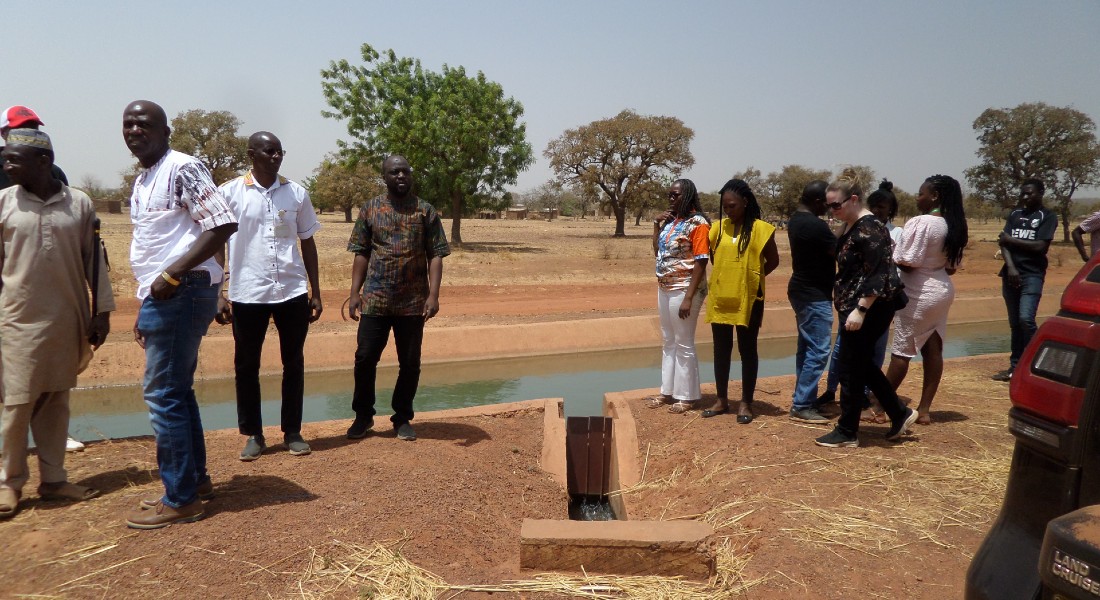
Field visit 2024 to Nanoro with Helle Samuelsen, Pascal Magnussen and Helle Smedegaard Hansson, followed by meetings with project staff in Ouagadougou.
Each month, the Project Management Team meet to sum up on field activities and discussing the data collected.
Four PhD students have been recruited doing field work and data collection. The PhD projects cover aspects of sociology/anthropology, molecular biology, climate & geography and microbiology/water quality. Recently, two Master students have joined the project.
A Hostile Environment Awareness Training course has been conducted in Denmark. The four PhD students, the field coordinator and three Danish researchers participated.
To read the full midterm report, please contact Project Coordinator, Pascal Magnussen
Intermittent Preventive Treatment of malaria in infants (IPTi) – The UNITAID project
Project title: Intermittent Preventive Treatment in infants – Plus’ (IPTi+) project.
Acronym: IPTi+
Aim: The overall aim is to reach more children, more frequently, in the first years of life to reduce malaria in young children and infants and save lives by use of the IPTi intervention which will be trialed out in Benin, Cameroon, Côte d’Ivoire, and Mozambique
Period: 1 September 2021 - 31 July 2025
Partners:
Population Services International (PSI)
London School of Hygiene and Tropical Medicine (LSHTM)
Ministries of Health in Benin, Cameroon, Côte d’Ivoire, and Mozambique
Project coordinator: LSHTM
Funder: UNITAID
Grant (Danish part): approx. DKK 5 mill (total: USD 35mill)
Project title: Development of a biosynthetic odor receptor-based biosensor for non-invasive diagnosis in breath
Aim: Development of a new (non-invasive) diagnostic tool for malaria based on breath.
Period: 1 January 1 2020 - 31 December 2022
Partner:
Department of Biotechnology and Biomedicine. Technical University of Denmark, Denmark
Project coordinator: Maria Dimiaki
Funder: Lundbeckfonden
Total grant: 1,999,523 DKK